
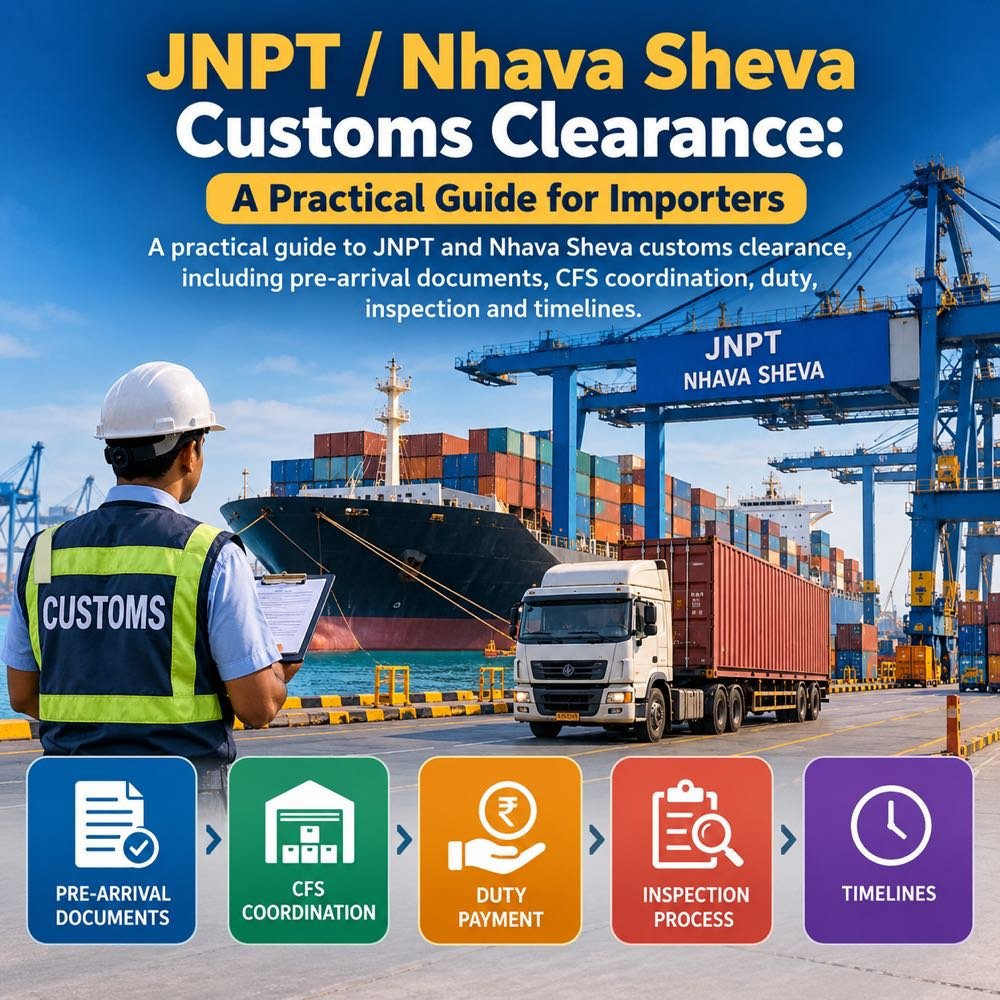
JNPT, also known as Nhava Sheva, is a major gateway for containerised cargo serving Mumbai and the wider western India market. For importers, an efficient JNPT customs clearance plan depends on more than the day the vessel arrives. Document preparation, filing readiness, terminal or CFS movement, assessment, duty handling and examination coordination all affect the release timeline.
This guide maps the key stages so import teams can assign responsibilities early, reduce avoidable storage exposure and keep internal stakeholders informed.
Start with a pre-arrival document review
The best time to identify a clearance problem is before the container reaches the port. Review the commercial invoice, packing list and Bill of Lading together. Confirm that the consignee details, package count, weights, marks, product description and transaction terms agree across the documents.
The importer should also confirm the IEC, intended HS classification, valuation inputs and any product-specific licence or approval. If a certificate of origin will support a preferential duty claim, check that the document and the underlying transaction meet the applicable conditions before relying on it.
Understand the role of terminal and CFS coordination
Port clearance involves physical movement as well as Customs processing. Depending on the applicable arrangement, an import container may require coordination among the shipping line, terminal, Container Freight Station (CFS), Customs and the importer’s appointed service providers.
Importers should know where the container is expected to move, which documents or releases are needed for each stage and who is monitoring the status. This prevents a common problem: the customs declaration may be progressing while a separate line, terminal or CFS requirement remains unresolved.
Filing and assessment of the import declaration
The Bill of Entry contains the declared classification, value, origin and duty treatment of the goods. Filing should be based on a complete, checked document set. Generic descriptions, inconsistent quantities or missing cost components can result in questions and amendments.
During assessment, Customs may request clarification or supporting records. A designated person should be available to provide product literature, payment or transaction documents, classification support or regulatory approvals without waiting for multiple internal hand-offs.
Duty planning and payment readiness
Before arrival, estimate the potential duty and taxes using the proposed classification and valuation. The final amount remains subject to the applicable assessment, but early planning helps finance teams arrange funds and avoids a release delay after assessment is complete.
If an exemption or preferential rate is expected, retain the supporting notification, origin documentation and product details. Claims should be reviewed carefully because the conditions may be specific to the goods, importer, origin or intended use.
What happens when Customs selects the cargo for inspection?
If the shipment is selected for examination, the container or packages must be presented in line with the instructions issued for that shipment. The inspection may compare labels, model numbers, quantity, condition or product characteristics with the declaration and supporting documents.
Good coordination matters here. Package references should be clear, the relevant technical information should be available and discrepancies should be reported honestly. The clearance team should document the outcome and communicate any further requirement to the importer promptly.
A realistic JNPT clearance timeline
A precise clearance time cannot be promised before the shipment details are known. A straightforward shipment with complete documents may progress quickly, while a query, inspection, amendment, regulatory hold or line-related requirement can add time.
Use a milestone view rather than a single estimate: documents received, declaration filed, assessment completed, duty handled, inspection completed if applicable, Customs release obtained and line/CFS formalities completed. This makes delays visible and actionable.
Practical checklist for importers
- Send the draft document set for review before vessel arrival.
- Confirm the HS-code basis and product-specific compliance requirements.
- Track the original or electronic transport-document status.
- Arrange duty-payment readiness with the finance team.
- Nominate one decision-maker for classification, valuation and document questions.
- Request milestone-based status updates until cargo release.
Frequently asked questions
Are JNPT and Nhava Sheva the same location?
The names are commonly used together for the port area. Shipment documents and operational instructions should still be checked for the specific terminal and CFS details.
Can the Bill of Entry be prepared before vessel arrival?
Pre-arrival preparation is possible when the necessary documents and shipment data are available. The applicable filing and validity rules should be confirmed for the shipment.
What is the biggest cause of avoidable delay at JNPT?
Incomplete or inconsistent documents are a frequent cause. Late decisions on classification, value or approvals can also delay filing and query responses.