
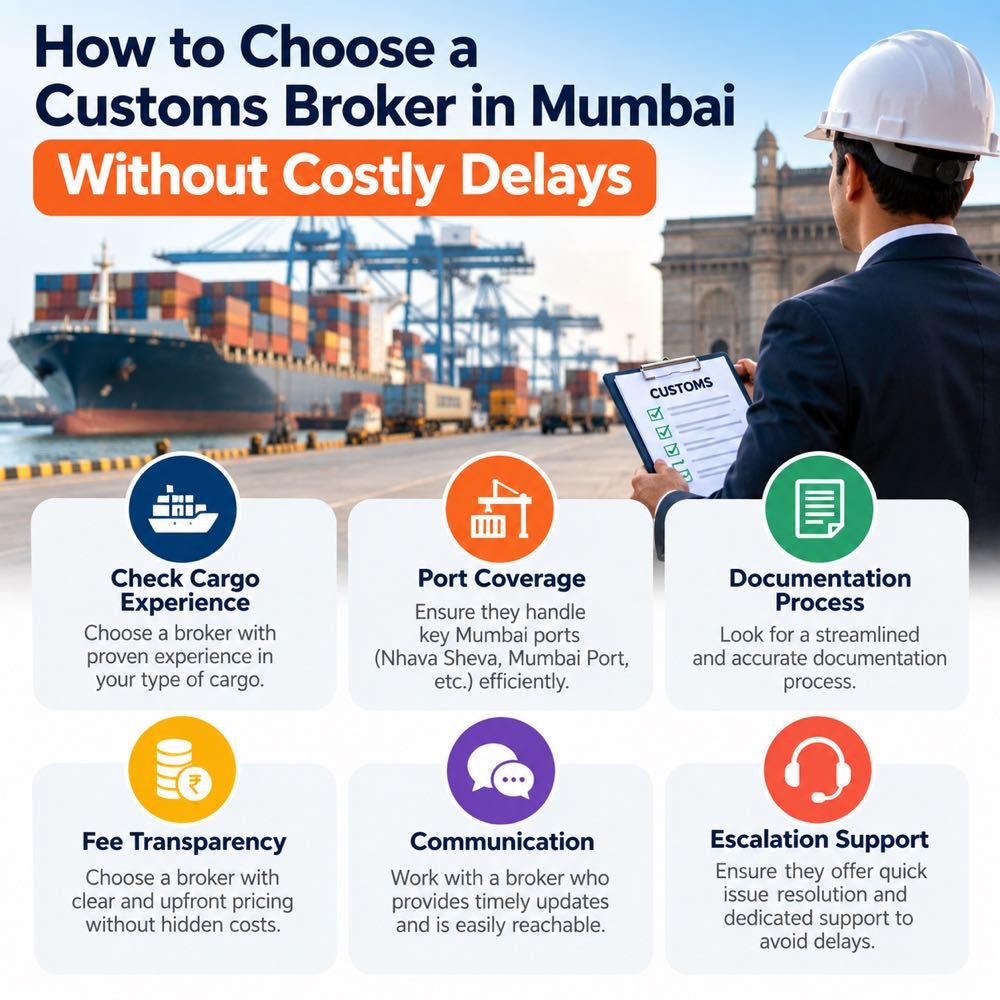
A customs broker influences how quickly document gaps are identified, how clearly risks are explained and how effectively queries are coordinated. Choosing only on the lowest service fee can be expensive if the shipment later faces corrections, storage exposure or poor communication.
Businesses searching for a customs broker in Mumbai should evaluate process, experience and accountability. The following criteria help importers compare providers on the factors that matter after the quotation is accepted.
1. Check relevant cargo experience
Ask whether the team has handled goods with a similar product profile, mode and regulatory complexity. Experience should be specific enough to identify likely documents and decision points, but it should not be presented as a promise that Customs will treat every shipment the same way.
A strong provider will ask detailed questions about the commodity, material, function, brand, model, origin, value and intended use before giving firm advice.
2. Confirm location and mode coverage
Mumbai import activity can involve seaport and airport processes, including JNPT / Nhava Sheva for containerised cargo and Mumbai air cargo operations. Confirm that the provider supports the exact arrival point and shipment mode named in your transport documents.
Ask who coordinates terminal, CFS, line or airport-related requirements when those activities affect the clearance process. Clear ownership prevents tasks from falling between multiple vendors.
3. Evaluate the documentation process
A capable customs broker should provide a shipment-specific checklist and review documents before filing. Look for a process that checks descriptions, quantities, values, weights, HS classification, origin claims and applicable approvals across the complete document set.
Ask how the broker records importer approval of declaration data and how amendments are controlled. A documented review trail improves accuracy and makes future shipments easier to standardise.
4. Ask for transparent commercial terms
The quotation should distinguish the professional service fee from third-party, statutory or shipment-dependent charges. Ask what is included, what may be billed separately and which costs require prior approval.
Do not compare two quotations until the scope is aligned. A low headline fee may exclude document handling, examination coordination, out-of-hours work or other activities that another quotation includes.
5. Test communication before appointing the broker
Notice how clearly the provider responds during the quotation and document-review stage. Does the team identify missing information? Are questions specific? Can they explain customs terminology in business language? These are useful signs of how shipment updates will be handled.
Agree on status milestones, the primary contact and the escalation channel. Importers should be told what is pending, who owns the next action and what risk the delay creates.
6. Look for realistic risk management
Be cautious about guaranteed clearance times or assurances that no examination or query will occur. Customs decisions depend on the declaration, cargo, risk selection and applicable requirements.
A professional broker manages what can be controlled: early document review, accurate filing inputs, prompt query responses, organised examination support and honest status reporting.
Questions to ask before you decide
- Have you handled this type of cargo and arrival location?
- What documents do you need before the shipment departs?
- How will you validate classification and product compliance inputs?
- Who will be my day-to-day contact and escalation contact?
- Which milestones will appear in status updates?
- What is included in the quotation and what may be charged separately?
- How are Customs queries, examinations and amendments communicated?
- What information do you need from our finance and procurement teams?
Red flags to avoid
- A quotation issued without asking for basic cargo details.
- Pressure to use vague or inaccurate product descriptions.
- Unclear responsibility for approvals, duty inputs or third-party charges.
- No named operational contact or escalation route.
- Guaranteed outcomes that depend on Customs or another authority.
- Status updates that report a delay without identifying the next action.
Make the appointment shipment-ready
Once selected, give the broker clean master data: legal entity details, IEC information, authorised contacts, product catalogue and previous classification support where relevant. Define the approval workflow for filing and unexpected cost.
For repeat imports, review the first few shipments and create a standard checklist. Consistency improves when the importer and broker treat clearance as a shared process rather than a last-minute hand-off.
Frequently asked questions
Should I choose a customs broker only on price?
No. Compare experience, document controls, communication, scope and escalation support as well as price. A low fee may not represent the lowest total shipment cost.
Can a broker guarantee same-day customs clearance?
No responsible provider can guarantee an outcome controlled by Customs, cargo selection or another authority. Ask for a realistic milestone plan instead.
What should I send for an initial discussion?
Share the commodity description, invoice or draft invoice, packing details, origin, mode, expected arrival point and any known licence or handling requirement.